
Thank you for the music: Songs With Cryptic Lyrics
Eighteen Yellow Roses
(Bobby Darin/1963) Bobby Darin
This song starts out like any other song about a guy being dumped by his girlfriend, but by the third line one begins to wonder: "when the boy came to the door (delivering the 18 yellow roses), I didn't know what to say ... " It would be expected that a guy would send a girl yellow roses, but a girl sending them to a guy? I don't think so. Anyway, back to the song. Things seem relatively ok until the line "I guess there's nothing left for me to do, but ask to meet the boy who's done this thing (What thing? get her pregnant?) and find out if he's got plans to buy you a ring". If you have just been dumped, what business is it of yours whether or not your ex is going to marry someone else. And who, upon being dumped, asks to meet the new love in their ex-partner's life.
But then comes the REALLY puzzling line; "for 18 yellow roses will wilt and die one day, but a father's love will never fade away." A father's love? Read that in conjunction with the rest of the song and the whole things smells of incest!
According to a biography on a Bobby Darin fan website, the song was written to his wife of three years, actress Sandra Dee (right), in response to their marriage break-up, when she walked out on him. The 18 Yellow Roses are apparently a reference to the fact that Darin used to send Sandra bunches of 18 yellow roses when they were courting. That explanation about the song leaves more questions than it answers.
Jumpin' Jack Flash
(Mick Jagger; Keith Richard/1968) The Rolling Stones
"Jumpin' Jack Flash" is a song by The Rolling Stones, written by Mick Jagger and Keith Richards and released as a single on 24th May, 1968. It was recorded during the Beggars Banquet sessions, but not included on the album. According to The Stones, this song came about after Keith and Mick were up all night trying to think of a song. Keith's gardener's footsteps woke them up. When Mick asked what the noise was Keith said it was "Jack Flash" outside. The gardener's name was Jack Dyer and it is to him the song is dedicated.
Humanities scholar Camille Paglia has speculated that the song's lyrics might have been partly inspired by William Blake's poem "The Mental Traveller": "She binds iron thorns around his head / And pierces both his hands and feet / And cuts his heart out of his side / To make it feel both cold and heat." Jagger said in a 1995 interview with Rolling Stone that the song arose "out of all the acid of Satanic Majesties. It's about having a hard time and getting out. Just a metaphor for getting out of all the acid things." And in a 1968 interview, Brian Jones described it as "getting back to ... the funky, essential essence" following the psychedelia of Their Satanic Majesties Request.
Bill Wyman claims he wrote most of the music, including the main riff, on the piano. It is credited only to Mick Jagger and Keith Richards, something Wyman was never happy about. What it is about is anyone's guess. It is rumoured to be about drugs - a "Jumpin' Jack Flash" is supposedly a way to inject heroin into the tear ducts. "Jumpin' Jack Flash" is also a nickname of Scottish politician Jack McConnell. What I'd like to know is, if Jumpin' Jack Flash is a gas gas gas, at what temperature would he become a solid?
Da Doo Ron Ron
(Ellie Greenwich, Jeff Barry, Phil Spector) The Crystals
There were some really silly songs written in the sixties, and there were some pretty catchy little numbers that you couldn't help liking too. This song, which was a hit for the girl group, The Crystals (or so we are led to believe), falls into both categories. That prolific songwriting genius Ellie Greenwich came up with the song, Jeff Barry tweaked it a bit and scored a co-writing credit for his trouble, as did its producer, Phil Spector. He originally had Darlene Love record it at Gold Star studios in Los Angeles. After singing lead on the Crystals' previous hits "He's a Rebel" and "He's Sure the Boy I Love," Darlene received session fees. After singing on this, she preferred to be signed to an artist's contract. Spector responded to her demand by erasing her vocals and flying in Crystals lead singer Dolores "La La" Brooks to replace the lead vocal. The backup vocals were provided by The Blossoms and Cher.
That's all very interesting, but the question that has perplexed me for four decades is, what does 'da doo ron ron' mean? According to Ellie Greenwich, who spilled the beans on a recent radio interview, (unlike doo wah diddy, diddy down diddy do) it means absolutely nothing. When she was writing the song, she couldn't think of an appropriate like to follow "I met him on a Monday and my heart stood still" so she put in the line, 'da doo ron ron' until she could come up with something better. Try as she may, nothing came. She asked Jeff and Phil, and they couldn't come up with anything, so they left the line in and it made the song famous. "We got all the rest of the words and music together but we couldn't find anything for this bit. Believe me, it doesn't mean a thing." Doo wah diddy, on the other hand, does have a strong meaning, she insists. According to Ellie, it's how she visualised a young girl - an Alice in Wonderland type of kid - skipping down the street and singing. I think I like her explanation of what 'da doo ron ron' means better.
Iko Iko
(James Crawford, Barbara Hawkins, Rosa Hawkins and Joan Johnson/1964) The Dixie Cups
Upon first hearing this song, one wonders what nastiness would drive its author to be so spiteful towards the person to whom the lyrics are addressed. To understand the song one has to understand the New Orlens Mardi Gras Indians, from whose culture it comes. This cultural phenomenon is mysterious even to many New Orleans locals. The Black Indians have masqueraded at least as long as the Zulus, but their customs, and even much of their musical dialogue, has remained a mystery. The world outside of the Crescent City first heard the language of the Mardi Gras Indians when a popular vocal trio from New Orleans, The Dixie Cups, concluded a string of hits from their album "Chapel of Love" with "Iko Iko" in the spring of 1965. "Iko Iko" was described as "an old Mardi Gras chant that most New Orleans kids had heard all their lives." Sisters Rosa and Barbara Hawkins, and cousin Joan Marie Johnson, chanted the catchy verses during the recording of "Chapel of Love."
The song had actually been a local hit for "Sugar Boy" Crawford during New Orleans' Mardi Gras Carnival in 1954 as "Jock-A-Mo." Crawford commented, "'Jockamo-A-Mo' came from two songs that I used to hear the Mardi Gras Indians sing. When I was growing up I lived near the Battle Field where the Indians paraded on Mardi Gras Day. While the exact meaning of the words is not known, the rhythms of the Mardi Gras Indians come from Africa and the Caribbean. Slaves performed the elaborate African rhythms at weekly gatherings, a tradition that continued into the Twentieth Century at New Orleans' famous Congo Square. Phrases like "Jockomo-Fee-Nah-Ney" are thought to have been defiant secret dialogue used to tell slave masters or chain gang bosses to "Go to Hell".
River Deep, Mountain High
(Ellie Greenwich, Jeff Barry, Phil Spector/1966) Ike and Tina Turner
This punchy number was written by Ellie Greenwich, Jeff Barry and Phil Spector. Greenwich and Barry were the husband and wife songwriting team who wrote meaningless hits like "Hanky Panky" and "Do Wah Diddy Diddy." Spector draped this song in his "Wall Of Sound" recording technique, and it is remembered as perhaps the best example of its kind. Though the song is credited to Ike and Tina Turner, Spector didn't want Ike to have any part in it and made sure all the recordings sessions occurred when he wasn't around. Spector was sure he had a hit on his hands, but the single failed to chart in the US, which caused him to fall into a depression. He announced his retirement, went into seclusion and stopped working until 1970, when got his revenge on the record buying public by stuffing up The Beatles' Let It Be album and producing solo works by George Harrison and John Lennon.
So what's wrong with the lyrics? I have a problem with "It gets stronger as the river flows, Deeper baby, heaven knows, Higher, as it goes" Higher as it goes? Give me a break. But that's nothing compared to what Tina sings before she starts her screaming fit ... "I love you baby like a flower loves a spring, I love you baby like a robin likes to sing, I love you baby like a schoolboy loves his thing" What thing? and get your minds out of the gutter. Certain parts of the male anatomy weren't called "things" back then, and besides, if they were ... well, we won't go into that. Could this be another case of the use of a word that rhymes but means nothing until such time as Ellie, Jeff and Phil got a bit of inspiration (see 'da doo ron ron') but the inspiration never came? When Deep Purple recorded the song, they changed the line to "I love you baby like a schoolboy likes his pie"; Celine Dion sings " And I love you baby like a school boy loves his pet" in her version; Annie Lennox changed the words to " And I love you baby like a schoolboy loves his bag ". They obviously had the same trouble with the lyrics as I had.
A Whiter Shade of Pale
(Gary Brooker/1967) Procal Harem
Procol Harum, and their one hit, would have to be the most famous one-hit wonders of all time. The song's music, compiled by Gary Brooker, is said to be based on "Sleepers, Awake," one of the movements in Bach's Suite No. 3 in D Major. The opening organ solo isn't "Sleepers Awake", however, but a brilliant bit of faux-Bach probably created by band member Matthew Fisher, who filtered recollections of Bach through his own creativity to come up with something new. His intro was not part of the original recording and was very much an after-thought. Many felt Fisher deserved a writing credit for this very key aspect of the song's enduring appeal.
The origin and meaning of the words are anyone's guess. One source claims the lyrics are from a poem by Keith Reid, and were a collection of abstract phrases about boy/girl relationships using sailing metaphors. It sounds very profound, but they were in all probability little more than a spoof of the psychedelic lyrics popular that began appearing in an increasing number of songs at the time. It is generally accepted these days that the lyrics reflect the variety of conversations that could be heard at high-brow parties in Britain in the swinging sixties, and that the title of the song is merely a reference to a girl at one such party throwing up after having mixed one too many drinks.
The meaning of the song appears to be as obscure as the meaning of the band's name. Gary Brooker claims the band's manager at the time "phoned up and said he'd found a name. We said, 'What is it?' 'Procol Harum.' 'Oh, great.' And it sounds like us, in fact, it sounds like what we sound like, so that was that. He didn't just pluck it out of the air, it was a Pedigree name of a cat of a friend of his. 'What does it mean? We didn't know, so we had to find out. We did find out that we actually had got the name wrong over the telephone, we spelt it wrong. But in Latin, the cat's name was 'Procul' with a 'u' and 'Harun' with an 'n' on the end, 'Beyond these things' in Latin. We got round to saying that Procol Harum in fact meant 'Beyond these things', which was a nice coincidence: at least it didn't mean, 'I'm going to town to buy a cow' or something."
Ma Belle Ami
(1969) Tee Set
This love song from Dutch pop artists, Tee Set, seems pretty straight forward apart from one line in the chorus: " Let the bells ring, Let the birds sing, Let's all give my substitute a big cheer, Let the bells ring, Let the birds sing, For the man after him waits here". One explanation is that the whole song got a bit mixed up in the translation from Dutch to English. According to the source that suggests this, the line "You were the answer of all my questions, Before we're through" is really saying, "Before we broke up (were through), you were the answer to all my questions". "That you amaze me by leaving me now, And start anew" is saying "I am shocked that you left me to start a new relationship with someone else". If that is the case, the lines "Let's all give my substitute a big cheer ... for the man after him waits here" might well be a bit of sarcasm, meaning, "Let's give the man who is replacing me a big cheer because he is ready and waiting for me to bow out". It's as good an explanation as I have heard thus far.
The group's Hans Van Eijck and Peter Tetteroo established a songwriting partnership that was to cultivate some of Tee Set's most successful work. Their first collaboration, "Ma Belle Amie" was a world-wide smash and sold more than six million copies Rumour has it that Paul McCartney sang the harmony.
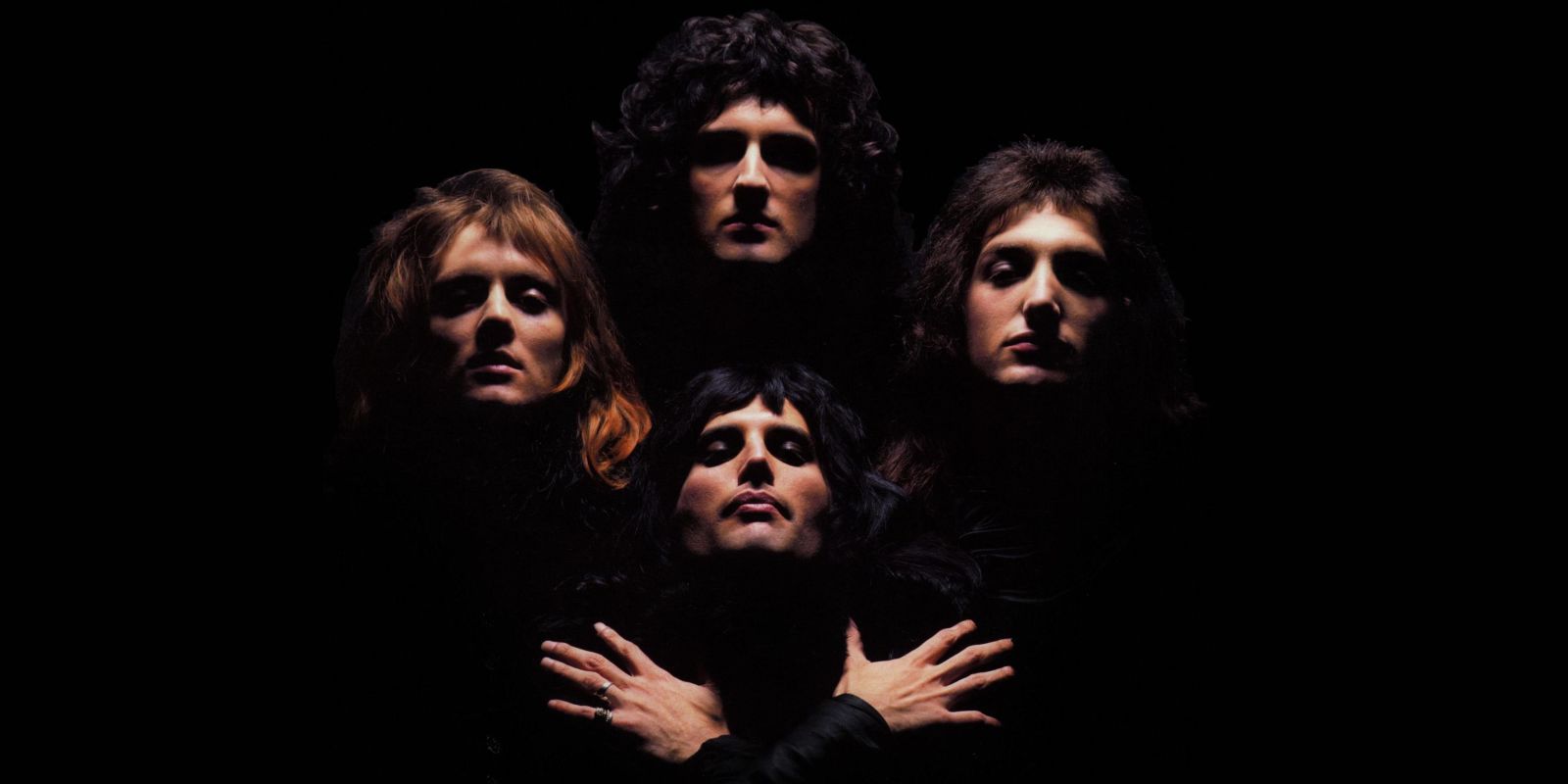
Bohemian Rhaapsody
(Freddy Mercury/1975) Queen
Freddie Mercury (his real name was Farookh Bulsura) wrote the lyrics, and there has been a lot of speculation as to their meaning. Mercury's parents were deeply involved in Zoroastrianism, and words like "Bismillah" do have a meaning in that religion. His family grew up in Zanzibar, but was forced out by government upheaval in 1964, and they moved to England. Some of the lyrics could be about leaving his homeland behind. A lot of words from the lyrics appear in the Qu'ran. "Bismillah" is one of these and it literally means "In the name of Allah." The word "Scaramouch" means "A stock character that appears as a boastful coward." "Beelzebub" is one of the many names given to The Devil. Mercury is said to have written "Galileo" into the lyrics for the benefit of Brian May, who is an astronomy buff. Galileo is a famous astronomer known for being the first to use a refracting telescope.
In an interview with Brian May and Roger Taylor on the Queen Videos Greatest Hits DVD, Brian said: "What is Bohemian Rhapsody about, well I don't think we'll ever know and if I knew I probably wouldn't want to tell you anyway, because I certainly don't tell people what my songs are about. I find that it destroys them in a way because the great thing about a great song is that you relate it to your own personal experiences in your own life. I think that Freddie was certainly battling with problems in his personal life, which he might have decided to put into the song himself. He was certainly looking at re-creating himself. But I don't think at that point in time it was the best thing to do so he actually decided to do it later. I think it's best to leave it with a question mark in the air." When you listen to that song you here random words and a incomplete story. What I hear is Freddy telling a story about himself. Freddy was a struggling homosexual who was fighting for personal freedom. Perhaps the song is about learning to accept himself and hope others will.
About the actual recording, the backing track came together quickly, but they spent days overdubbing the vocals in the studio using a 24 track tape machine. By the time they were done, about 120 vocal tracks were layered together. The original album version was over 7 minutes long. It was cut down to 5:55 for release as a single, which the record company leaked to a London radio station in order to build anticipation for the album. This helped the single jump to number 1 in the UK shortly after it was released. Ironically, the song that knocked this off the number 1 chart position in the UK was "Mama Mia" by ABBA. The words "Mama Mia" are repeated in this in the line "Oh mama Mia, mama Mia, mama Mia let me go."
Macarthur Park
(Jimmy Webb/1967) Richard Harris
In the summer of 1967, songwriter Jimmy Webb composed a 22-minute cantata that ended with a seven-minute coda called 'MacArthur Park'. He offered it to Bones Howe, who produced The Association, for possible inclusion on the group's fourth LP. Howe loved it, but the group did not want to give up half the album for Webb's project, so they rejected it, and somehow Richard Harris picked it up. Harris was an actor, not a singer. His performance on this was essentially "acting," though, he "read" the lyrics with a great deal of drama, having recorded it shortly after starring in the movie, Camelot. The song must sound a little pretentious to today's audiences, but it was revolutionary at the time, especially at that length (remember that contemporary music back then was largely limited to three-minute singles on AM radio). And while Richard Harris is about as much of a singer as Rex Harrison was in My Fair Lady, the lyrics and orchestration are incredibly moving.
What does it all mean? Does it describe a love affair that is over too soon for at least one of the lovers? Some say it is a poem and therefore is not meant to be read literally but interpreted by each person personally. And what does Jimmy Webb say the song was about? He's never said much, but what he has said indicates he wrote it about nothing in particular, which might explain why it makes little sense! Why call it 'Macarthur Park'? That's the name of a park in Los Angeles renown for its drug dealers, gang bangers and prostitution ... which might give just an inkling as to what it's really about.