
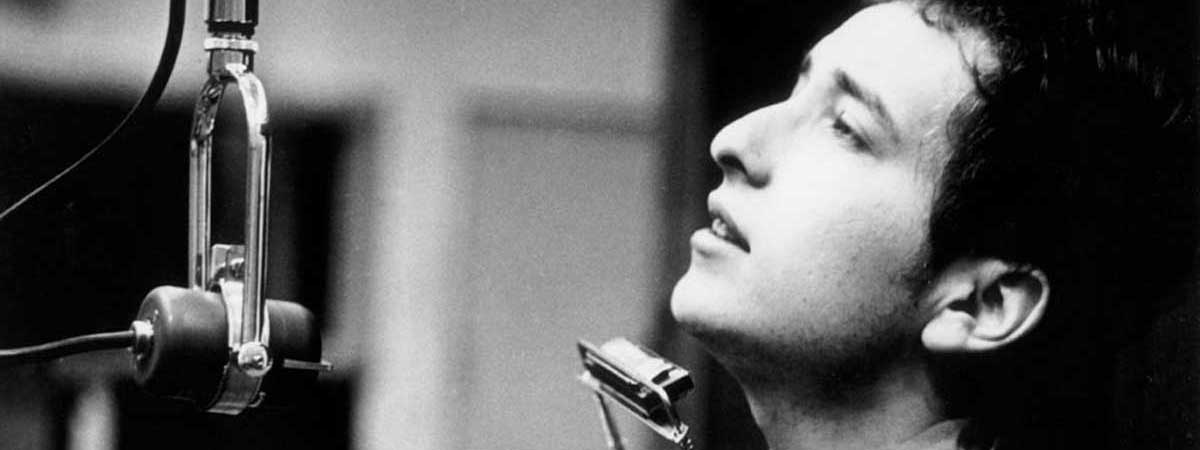
Thank you for the music: Favourite Male Recording Artists
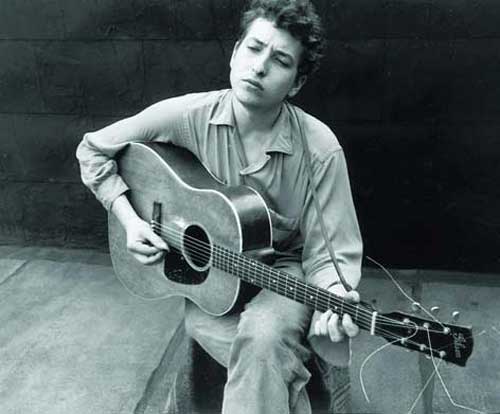
Bob Dylan
He couldn't sing (he's a bit better these days), he could barely play guitar but, man, could this guy write songs! To me, Bob Dylan is the greatest artistic figure of the twentieth century. I make no apologisies for making such a bold and sweeping statement because I believe that, even more so than the Beatles, Bob Dylan single-handedly radically changed popular music. Before Dylan, lyricism was effectively ignored by those penning the popular hits of the day. Sure, there were old blues veterans who poured their heart and soul into their lyrics but in terms of commercial pop music, lyrics were just a by-product (preferably as banal and as romantic as possible) to a nice melody.
The rock'n'roll literacy that Dylan brought to twentieth century consciousness was utterly revolutionary and directly responsible for rock music existing today as we know it. Without Dylan, there would be no Neil Young, no David Bowie, no Bruce Springsteen, no Byrds (obviously) and any subsequent band that places any kind of importance on their lyrics (therefore the Smiths, Nirvana, Replacements, etc.). Furthermore, it is doubtful the Beatles, Stones, Hendrix and so on would have produced nearly as impressive works if Dylan hadn't come along.
I doubt the Beatles would have gone from With The Beatles to Revolver in a mere two years without Dylan redefining rock'n'roll as art in the meantime. In fact, I cannot think of any serious (or at least good) artist post-mid-sixties that was not influenced in some way by Dylan's innovation.
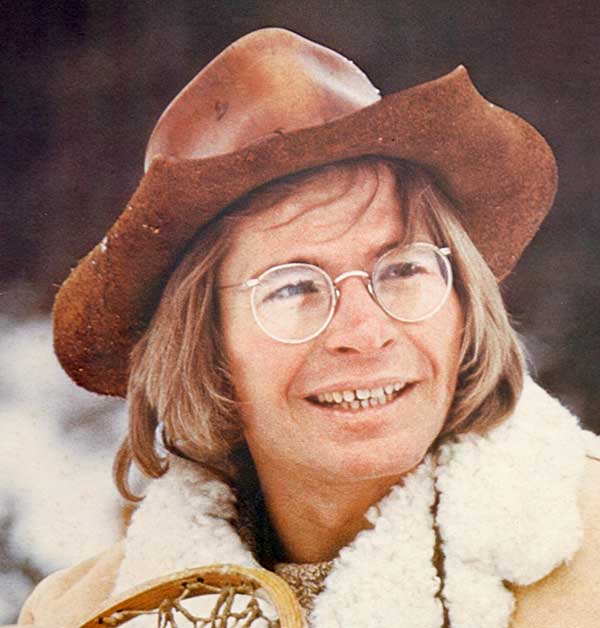
John Denver
I must say I did enjoy the music of the boy from the Rocky Mountains. It came as a breathe of fresh air in the mid 1970s when the pop music scene was dominated by disco. One of the world's best-known and best-loved solo performers of the 20th century, John Denver earned international acclaim as a songwriter, performer, actor, environmentalist and humanitarian. John’s music has spanned three decades, outlasted countless musical trends, and garnered numerous music awards and honours.
As a teen, John took up guitar lessons and joined a boy’s choir, which led him at age 20 to take matters into his own hands and pursue his dream of a career in music. In 1963 he struck out on his own, moving to Los Angeles to be in the heart of the burgeoning music scene. It was during this time that Henry John Deutschendorf Jr. was urged by friends to change his name if a recording career was to be in his future. His friends suggested the name John Sommerville, but he ultimately took his stage name from the beautiful Rocky Mountain capital city of Colorado, his home state.
Favourite Albums: Farewell Andromeda; Back Home Again
Favoutite Songs: Matthew; Some Days Are Diamonds, Some Days Are Stone; I Think I'd Rather Be A Cowboy.
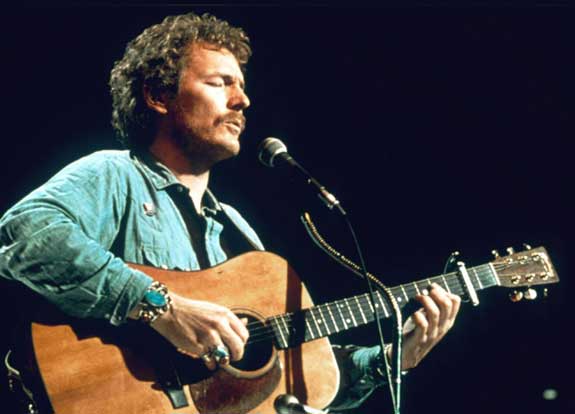
Gordon Lightfoot
It was in Vox Adeon Nicholson's record store in Hay Street, Perth, one day in May 1972m that I was stopped in my tracks by an unfamiliar male voice singing about how good it was to be "Alberta Bound". I flipped idly through the racks of records captivated by this troubador until the final track had finished, at which time I asked the shop assistant who I'd been listening to. She told me it was Gordon Lightfoot, a Canadian baladeer who had written Peter Paul & Mary's hit, That's What you Get for Loving Me, and the song If You Could Read My Mind, which had been a hit for Lightfoot two years earlier.
I loved the accoustic guitar playing of Peter Paul & Mary, therefore it is hardly surprising that the accoustic guitar work of Lightfoot and his key support musicians Red Shea and Terry Clements would catch my attention and draw my in. An added bonus was Lightfoot's simple by effective tunes and lyrics, which were both fresh and different. Needless to say, I bought the album Don Quixote (the one I had been listening to) on the spot and a week later after just about wearing it out, I had added Summer Side of Life and Sit Down Young Stranger, alternatively titled If You Could read My Mind, the total Lightfoot collection in Australian release at that time. Two years later, Gord's next album - Sundown - was purchased without me hearing a single note.
I was quite amused when Sundown became a bit hit and everyone else in the world discovered the man who I had been listening to and enjoying for a couple of years. The albums Cold on The Shoulder, Old Dan's Records and Summertime Dream followed and I loved every song on every album. In 1974, Lightfoot toured Australia and my wife and I went along to the Perth Concert Hall to hear him. Midway through the concert he dropped his guitar plectrum which threw him for a minute. I had a guitar plectrum in my pocket and was dying to rush up to the stage and offer it to him, but I was too embarrassed ... ah, lost opportunities.