Not everyone who has worked on the railways has had a train named after them. Two Australians that have are John JC Bradfield, an Australian engineer best known as the chief proponent of the Sydney Harbour Bridge and the City Circle of entral Sydney's railway, Norman Charles Harris, Chairman of Commissioners of the Victorian Railways from 1940 – 1950.
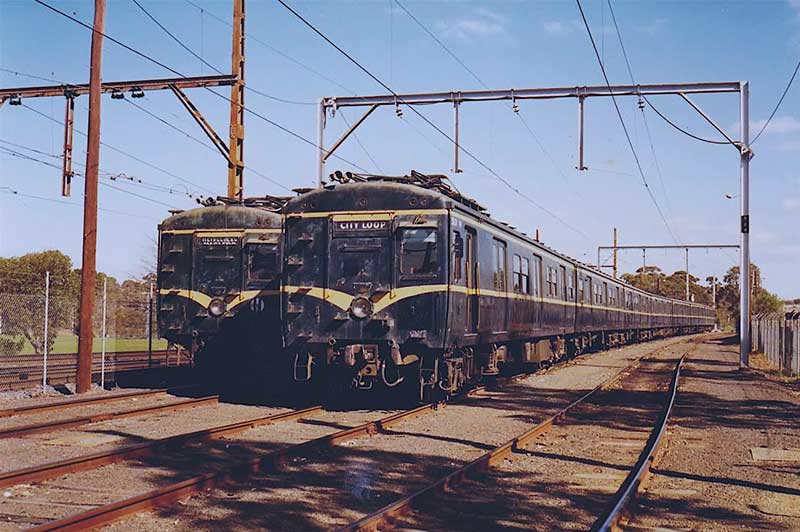
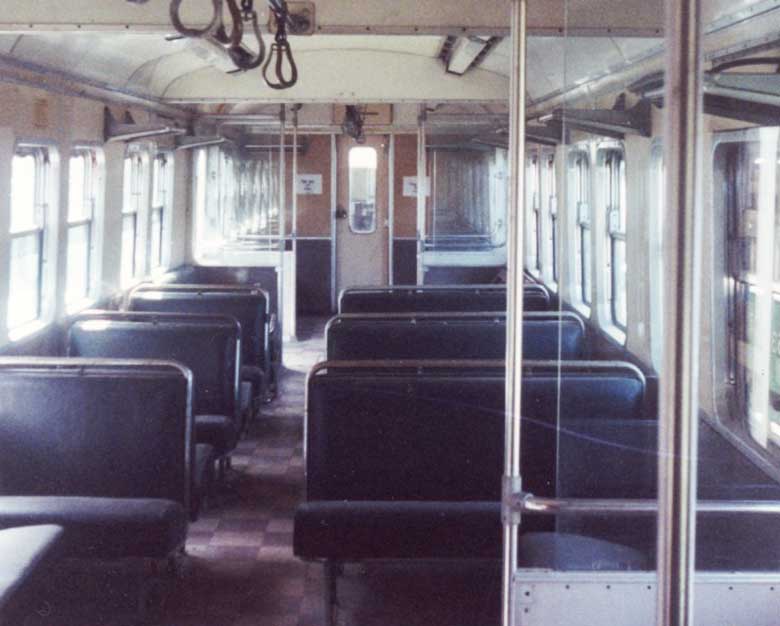
Harris trains were the first steel-bodied Electric Multiple Unit train to operate on the suburban railway network of Melbourne, Victoria, Australia. They were introduced in 1956, by the Victorian Railways, and last operated in 1988, although a number of the carriages were converted for other uses and are still operating. The Harris trains were commonly referred to as "Blue Trains" due to their deep blue colour, with only a yellow band about halfway up the body. Royal blue and yellow were common colours for the Victorian Railways rolling stock.
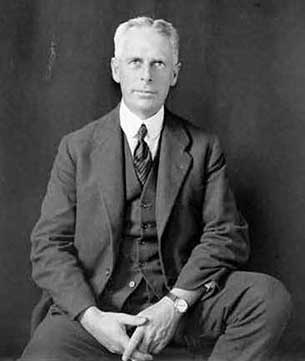
A decorated World War I army engineer, Norman Charles Harris DSO MC (10 April 1887 – 3 May 1963) attended Scotch College, East Melbourne, where he was head prefect, dux in science, mathematics and modern languages, a member of the firsts in rowing, cricket, football and athletics, and a witty contributor to the Scotch Collegian. In 1906-10 he studied engineering at McGill University, Montreal, Canada, where he graduated M.Sc. During his holidays he earned ten cents an hour with the Canadian Pacific Railway Co.
On leaving McGill, Harris joined C.P.R.'s technical staff and learned about rolling-stock construction, on which he was to become a world authority. In 1911 he returned to Australia to take up a post as an assistant-engineer with the Hydro-Electric Power Co. in Tasmania. In 1913 became a draftsman for the Victoria Railways and then joining his father in the rolling stock division.
During World War I he served on the Western Front with the 2nd Divisional Engineers. He organised trench improvements and the construction of four bridges over the River Ancre near Albert, Somme. He was awarded the Military Cross and a Distinguished Service Order. After the war, he spent some time in England, studying their railway system.
Returning to Melbourne in 1919, he became Assistant Chief Mechanical Engineer in 1922, Chief Mechanical Engineer in 1928, a Commissioner in 1933, and Chairman of Commissioners in 1940. Maintaining that 'railroading is a team job', Harris was well known for shovelling with the fireman, for his meticulous care of royal trains and for his denunciation of competition from road haulage.
In 1922, the first internal Combustion engine railmotor (RM14) arrived in Normanton. This was a converted Panhard Levassor road wagon.
His greatest peacetime triumph was 'Operation Phoenix', begun in 1950, which saw the refurbishment and replacement of Victorian Railways' rolling-stock. Thirty new seven-carriage suburban trains came into use from 1956. These blue Melbourne Suburban Electric Harris trains were named 'Harris trains' in his honour.
Harris retired in 1950, but remained chairman (1949-51) of the Victorian branch of the Institute of Transport of Australia.


Design by W3layouts