
Thank you for the music: Memorable Albums
The Visitors
(Atlantic, 1981) ABBA
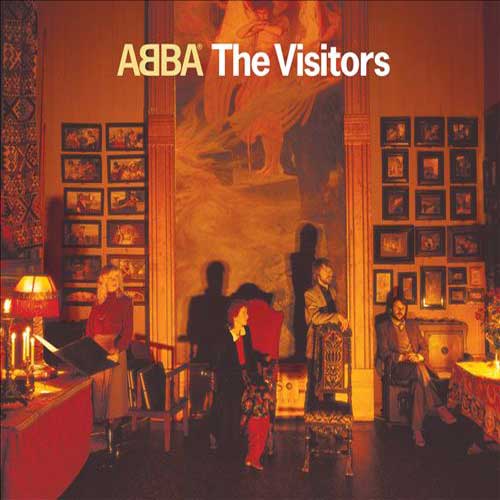
ABBA's last album, "The Visitors" was never intended as their swan song - they were to go on recording together. That may explain why, rather than the threadbare, thrown-together feel of many final albums, "The Visitors" is a beautifully made, very sophisticated album, filled with serious but never downbeat songs, all beautifully sung and showing off some of their boldest songwriting efforts.
ABBA's music on "The Visitors" is more pristine and ambitious than it had ever been, its themes darker, its personal politics more tangled. Both of the band's couples had divorced, but the men were still writing lyrics for the women to sing - meaning it's easy to see a cruel edge in tracks like "One of Us", in which a woman regrets her new independence - over a typically gorgeous melody. Inevitably, an icy professionalism reflecting the chilly atmosphere of the recording studio pervades "The Visitors". Unlike on prior albums, Agnetha and Frida don't even sing together in the verses on any of the nine songs. It's the record on which the wintry melancholy of "late ABBA" - whose sadness had bubbled under their music almost from the start - could finally dominate. Even the cover photo is morose.
All of this has made "The Visitors" a perennial critic's favourite. It had been five years and a musical lifetime since this band sung "Dum Dum Diddle", but for all its distance from ABBA's traditional sound, "The Visitors" never gives up on catchiness. This is grown-up, risk-taking pop, but always pop nonetheless. Aurally, the group was never better: The Visitors is deliciously crisp, layered, and rewarding. The ghostly "Like an Angel Passing Through My Room", the cryptic "Soldiers", the wise and sympathetic "When All Is Said and Done" are ABBA at their songwriting and performing best.
"The Day Before You Came" was added omn the CD release of the album. It is, on paper, a happier song than "The Visitors", but it shares its themes with much of the album: Life is unstable, happiness may be fleeting, and your world can be instantly and forever overturned. These are strong, resonant ideas to end a career on, and this is an excellent way to finish - a band and a record divided between almost throwaway studio mastery and spectral, uneasy premonitions of their own demise.
All Things Must Pass
(Apple-EMI, 1970) George Harrison
Divorce is never pleasant or easy, and when the greatest popular music band of all time reached the point of no return - theirs was painfully and publicly splintered. Just as there had been a Fab Four Beatle for every adolescent discovering the giddy thrills of rock'n'roll in the '60s, there was a divorced Beatle for every late teen/early adult in the '70s. Beatles solo albums appeared immediately, like bruises on a wound, and each had the quality of argument brought to a deposition, a side of a story argued.
Paul released a rash of 'silly love songs'; John gazed into the ugliest parts of himself and wailed; Ringo retreated into the schmaltzy pre-rock'n'roll standards of his youth, and much to everyone's surprise, George exhaled deeply, stretched, and flourished. "I had such a lot of songs mounting up that I really wanted to do, but I only got my quota of one or two tunes per album," he said when "All Things Must Pass" hit the record stores. Given his own studio, his own canvas, and his own space, Harrison did what no other solo Beatle did: He changed the terms of what an album could be. Rock historians mark "All Things Must Pass" as the first 'true' triple album in rock history, meaning three LPs of original, unreleased material.
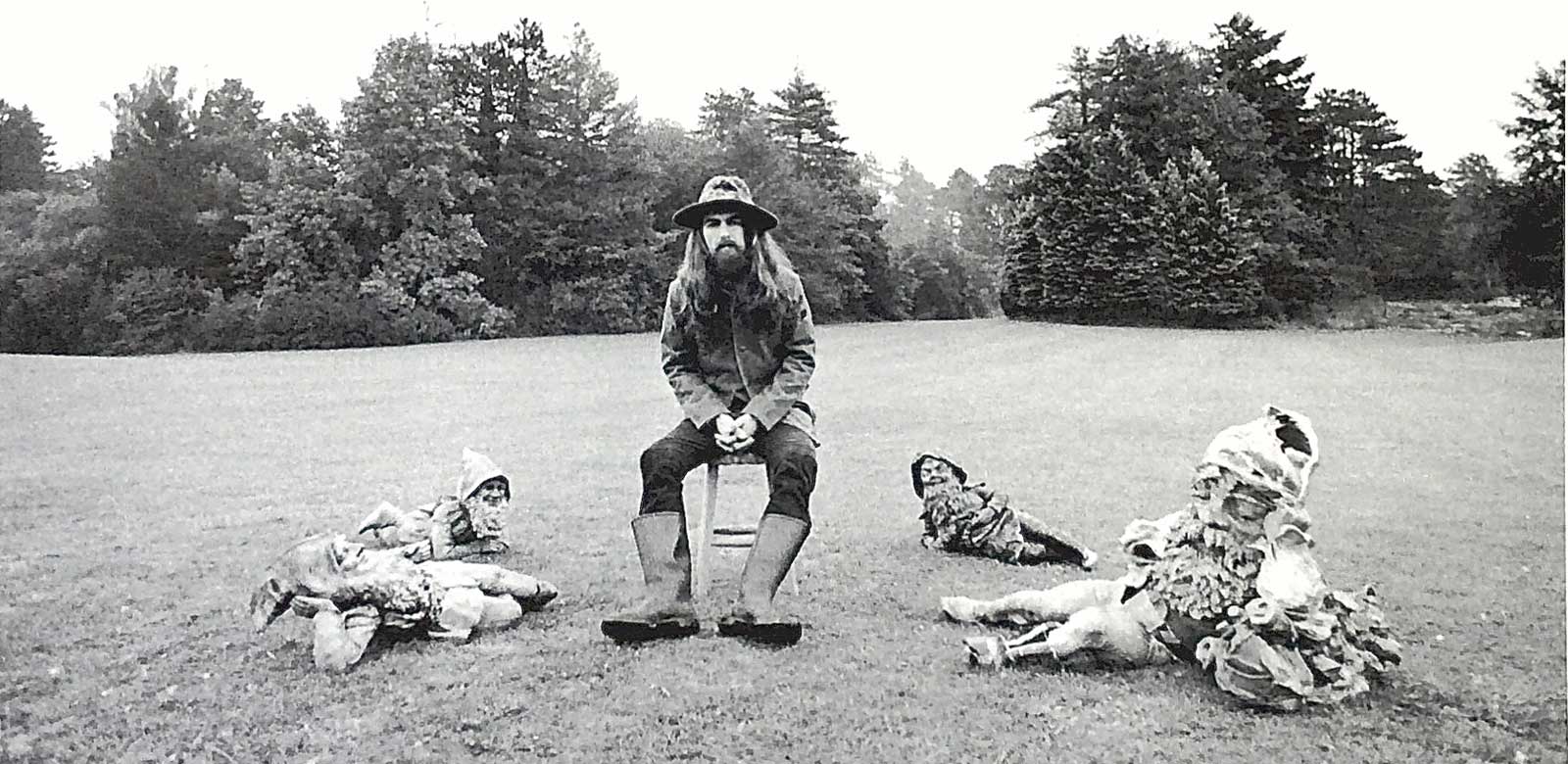
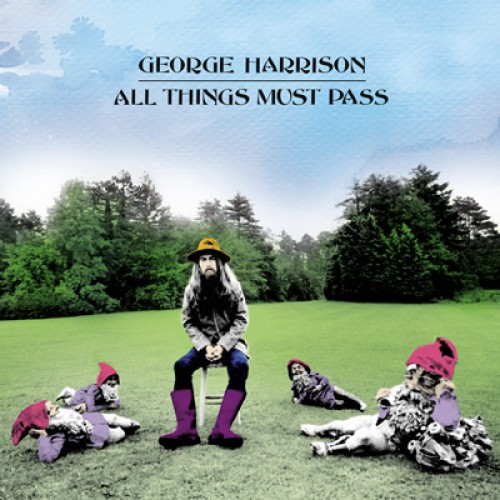
"All Things Must Pass" made a pointed statement. With its grave, formidable cover, its photo of a lone Harrison in the country, pointedly surrounded by three toppled garden gnomes, it still sits like a leather-bound book, a pop-music King James Bible on any shelf of records it occupies. It was the first of its kind - the unwieldy triple album that spilled out oceans of black vinyl, thousands of sheets of lyrics, and took five changes on the turntable to play from start to finish. It was the heaviest and the most consequential Beatles solo album, the first object from the Beatles fallout to plummet from the sky and land with a clunk in a generation of living rooms. Grossly over-produced by Phil Spector, it is a paean to having too much ambition, too much to say, to fit into a confined space, and for this reason alone it remains one of the most important capital-A Albums of all time.
Its success was sweet vindication for Harrison that the quiet Beatle was every bit as talented as the other three; his triumph was so resounding that his former partners could not pretend to ignore it. "Isn't It a Pity" had been rejected from Revolver, while "All Things Must Pass" was passed over for Abbey Road. In hindsight, it is impossible to imagine these songs having half the impact if they had appeared appeared on Beatles albums, but taken together, they have their own cumulative weight and depth. Hearing the bounty of material spilling forth on the album, Lennon and McCartney and the rest of the world finally grasped the depth of talent they had been slow to recognize.
Don Quixote
(Reprise, 1972) Gordon Lightfoot
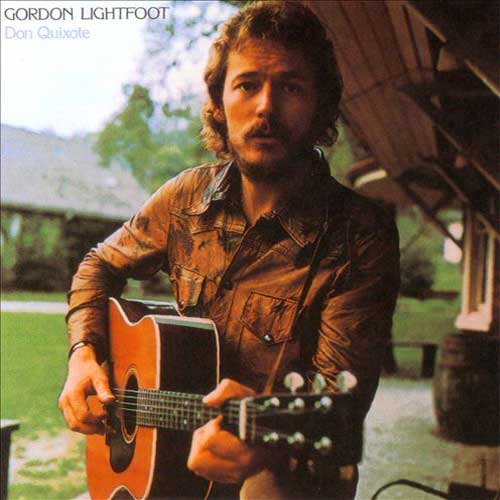
It was in a Perth record store back in May 1972 that I was stopped in my tracks by an unfamiliar male voice singing about how good it was to be "Alberta Bound". I flipped idly through the racks of records captivated by this troubador until the final track had finished, at which time I asked the shop assistant who I'd been listening to. She told me it was Gordon Lightfoot; and the album, "Don Quixote". I bought it immediately and it has been on my regular play list ever since.
Perhaps one of his most Canadian releases, Don Quixote is a very pleasant folk sounding album. From "Alberta Bound" to "Christian Island" to "Ode to Big Blue," Lightfoot pays tribute to the many and varied places that make up his homeland. Also of note are such love songs as "Beautiful" and the lovely "Looking at the Rain." All in all, there's not a bad cut here.
Besides Gord's excellent voice and lyrics, the album's main appeal to me is the simple all-accoustic guitar accompaniment with Gordon on 6 or 12-sting acoustic, Terry Clements on lead acoustic high string guitar, Red Shea on 6 string acoustic and Rick Haynes on electric bass holding it all together with not a drum kit in sight! So simple yet so effective.
Born in Orilla, Ontario in 1938, Lightfoot began singing at the age of four and learned piano and drums by his teens. He taught himself folk guitar and began writing songs, moving to California at age 20 to pursue a musical career. Strongly influenced by the acoustic folk of Pete Seeger and Ian and Sylvia, he survived by writing and producing jingles. California wore thin, and he moved back to Canada, slowly building a reputation as a skillful songwriter. In 1970 he found his first international success with "If You Could Read My Mind", a gold single that established him as an artist in his own right.