
Thank you for the music: Favourite Female Recording Artists
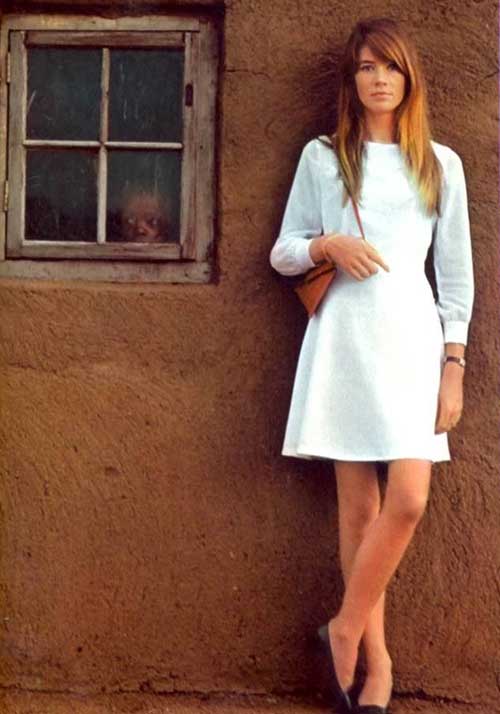
François Hardy
Immensely popular in her native France, the chanteuse first displayed her breathy, measured vocals in the early and mid-'60s. Her (mostly self-penned) recordings from that era draw from French pop traditions, lightweight '50s teen idol rock, girl groups, and sultry jazz and blues - sometimes in the same song. The material is perhaps too unreservedly sentimental for some (in the French tradition), but the songs are invariably catchy and the production, arrangements, and near-operatic backup harmonies excellent, at times almost Phil Spector-esque. Fans of Marianne Faithfull's mid-'60s work can find something of a French equivalent here, though Hardy's material was stronger and her delivery more confident.
In the 1950s, Hardy was inspired by early rock recordings to pick up the guitar, and was already writing her own songs by the time she was a teenager. By the age of 17, she was already singing her own compositions in French clubs, and successfully auditioned for Vogue Records in France in late 1961. Her debut EP appeared the following year, inaugurating a series of successful EPs and albums that would last through the '60s. Hardy sang of young love with both fetching moodiness and unrestrained ebullience.
Starting in 1964, Hardy made periodic attempts to capture the international market with English-language recordings. "All Over the World" was actually a British Top 20 hit in 1965, and was recorded by The Seekers. "Only You Can Do It was a top 10 hit in Australia in 1966. She has remained popular in France and continued recording well into the 2000s.
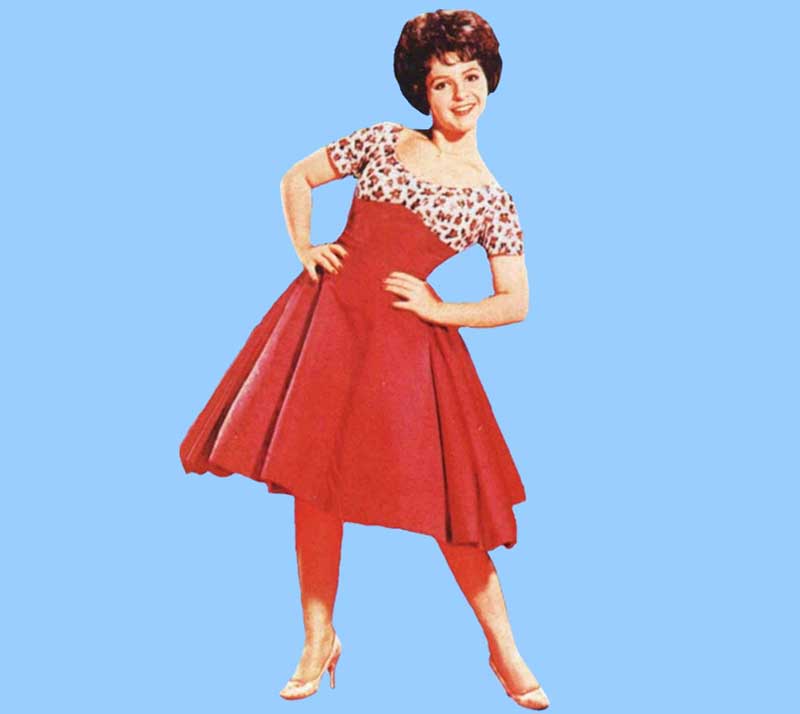
Brenda Lee
In the 1960s Brenda Lee had more charted hits than any other woman, and only three male singers/groups (Elvis Presley, Ray Charles and The Beatles) outpaced her. She was one of the earliest pop stars to have a major contemporary international following. The pint-sized singer was given the nickname Little Miss Dynamite after recording Dynamite in 1957; the explosive strength of the sound pouring out of her small frame amazed audiences and promoters. Her general popularity faded as her voice suffered damage and matured in the late 1960s, but she successfully continued her recording career by returning to her roots as a country singer. She was able to chart in Billboard's country-western top-ten twice in 1980.
As a child, her family was poor, living hand-to-mouth; she shared a bed with her two siblings in a series of three-room houses without running water. She was a musical prodigy. Although her family did not have indoor plumbing until after her father's death, they had a battery-powered table radio that fascinated Brenda as a baby. By the time she was two, she would hear songs on the radio once and be able to whistle the complete tune. Her father died in 1953. By the time she turned ten, she had become the primary breadwinner of her family by singing at events and on local radio and television shows.
She enjoys one distinction unique among successful American singers; her opening act on a UK tour in the early 1960s was a little-known beat group from Liverpool, England: The Beatles. The overall biggest selling track of Lee's career is, oddly enough, "Rockin' Around the Christmas Tree", a Christmas song, recorded in 1958, when she was 13. In 1960, she recorded her signature song, "I'm Sorry", which hit number one on the Billboard pop chart and was her first gold single. Her last top-10 single on the pop charts was 1963's "Losing You".
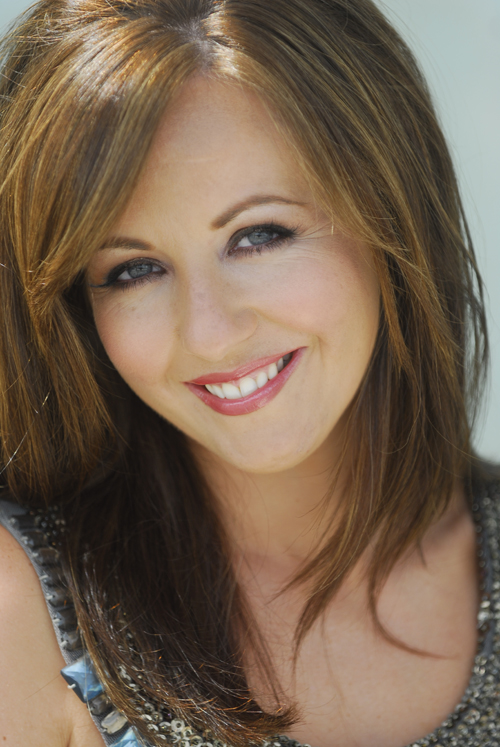
Lisa Kelly
Lisa Kelly is best be known to audiences as one of the soloists in 'Celtic Woman', but her background is purely steeped in the world of musical theatre. Her parents are both heavily involved in Ireland's amateur theatre community and Lisa fit right in, staring in the musical 'Bugsy Malone' at the age of 7. A talented actress as well as a singer, Lisa continued her studies in drama and was classically trained in both singing and piano. Her heart always belonged to the theatre though, where she has had principal roles as 'Velma Kelly' in Chicago, 'Florence' in Chess, 'Laurie' in Oklahoma and 'Sandy' in Grease.
To support herself, she took a 9-to-5 job as an applications consultant in the computer industry, but she gave up the steady income it provided in 1999 after being cast in a Christmas pantomime production at Dublin's Gaiety Theatre. In the aftermath of this risk, Lisa's life underwent radical changes. "I took a break from office work for a year, and I just never went back," she recalls. "The Christmas pantomime would be my first solid show, and it was going to last four months, so I just took a chance on it." That performance led Lisa to a role as the lead vocalist in Riverdance. Along the way, she met the man who would become her husband and the father of her three children, and became a founding member of Celtic Woman.
In January 2013 Lisa announced her departure from Celtic Woman and moved to Peachtree City, Georgia, USA, where she launched The Lisa Kelly Voice Academy, indicating a switch from performing to teaching. The new voice academy is being run in conjunction with her husband, Australian dancer Scott Porter, the former CEO of Celtic Woman Ltd.