
Thank you for the music: Songs I Like To Remember
Yesterday
The Beatles
Paul McCartney turns what was originally going to be an instrumental called 'Scrambled Eggs' into a sublime lament to lost love that hovers around the top of the list of the 20th Century's best songs. Effectively a Paul solo though it was released by The Beatles, it features no other vocals but his and a simple guitar and string quartet accompaniment brillantly crafted by producer George Martin. McCartney wrote some of the lyrics during a 5 hour car trip from Lisbon to Albufeira (in Algarve, south of Portugal), on 27th May, 1965, when he was on vacation with Jane Asher. The villa where Paul and Jane stayed was owned by Shadows' guitarist Bruce Welch. Bruce said that when he was packing to leave, Paul asked him if he had a guitar because (Paul) was working on the lyrics since the airport. Said Bruce: "He borrowed my guitar and started playing the song we all now know as 'Yesterday'."
Paul is said to have written this song for his mother when she'd alredy passed away. The lyrics say "I said something wrong, Now I long for yesterday". Apparently, he told a really bad taste joke when he and his brother found out that she had cancer; something he regretted saying and wished he could take back.
After recording this, George Martin suggested to Brian Epsitein that they put it out as a Paul McCartney solo single. Paul refused, and furthermore refused to have the song released as a Beatles single, since he felt that singles should be true group efforts. The Beatles couldn't (at that time) control what Capitol did with their songs overseas, so it was released as a single outside of Britain.
Some of the artists who have covered this song include Boyz II Men, Ray Charles, En Vogue, Marianne Faithfull, Marvin Gaye, Tom Jones, Nana Mouskouri, Elvis Presley, Frank Sinatra, The Supremes, The Toys, Andy Williams, and Tammy Wynette.
Sylvia's Mother
(Shel Silverstein) Dr Hook
Late sixties rock group Dr Hook suffered the embarrassment of bankruptsy before hitting the jackpot with this song. It was written by satirical cartoonist Shel Silverstein who wrote a string of hits for the rollicking group. According to Silverstein, though it was a parody of teen-heartbreak songs sung in classic dead pan style by Dennis Locorriere, there was in fact a realSylvia. In 1972, Silverstein told Rolling Stone magazine: "I just changed the last name, not to protect the innocent, but because it didn't fit. It happened about eight years ago and was pretty much the way it was in the song. I called Sylvia and her mother said, 'She can't talk to you.' I said, 'Why not?' Her mother said she was packing and she was leaving to get married, which was a big surprise to me. The guy was in Mexico and he was a bullfighter and a painter.
At the time I thought that was like being a combination brain surgeon and encyclopedia salesman. Her mother finally let me talk to her, but her last words were, 'Shel, don't spoil it.' For about ten seconds I had this ego charge, as if I could have spoiled it. I couldn't have spoiled it with a sledge hammer."
Silverstein was a popular author and songwriter, who wrote for both children and adults. He was a writer and cartoonist for Playboy magazine, and a best-selling author of children's poems. He wrote "A Boy Named Sue" for Johnny Cash and another hit song for Dr. Hook And The Medicine Show: "The Cover Of The Rolling Stone." He died of a heart attack in 1999 at age 68.
Heart Of The Matter
(Mike Campbell; Don Henley; JD Souther) Don Henley
Mike Campbell wrote the music and produced this track. As a member of Tom Petty and the Heartbreakers, Mike writes tracks for many of Petty's songs. He first collaborated with Henley in 1984 when he wrote and produced "The Boys of Summer," which he came up with on a 4-track tape recorder in his house.
Henley wrote the lyrics with J.D. Souther, who is a frequent collaborator with the Eagles. The song is about a man who finds out his former lover has found someone else, and which is exactly what they were going through at the time. In our interview with J.D. Souther, he explained: "At that particular moment it was an easy song for both of us to work on, because we had both, within the last year or so, broken up with our fiancees. We'd both been in love and engaged at the same time and both his relationship with his girl and me with mine ended in the same few months. And it's pretty much what the song says, they had both taken up with somebody else. And that's not easy to hear, but at the time it made a good source material for that song, because it seemed to be really universal and it seemed the only way to really survive your first reaction to hearing news like that or having those kind of feelings is to remember that the first person to benefit from forgiveness is the one who does the forgiving. And, actually, that was Don's idea. I have to give him full credit for that forgiveness theme. The first time he sang that forgiveness chorus over and over to me, I didn't get it. Kind of went, 'Yeah, I guess.' And then it sort of sunk it that it was exactly the point of the song." The line "The flesh will get weak and the ashes will scatter" is a biblical reference, coming from Matthew 26:41: "The spirit is willing enough, but the flesh is weak."
Hello
(Lionel Richie) Lionel Richie
Lionel Richie recalls that, when he was young, he used to watch beautiful women walk past but was too shy to talk to them. He thought to himself, "Hello, is it me you're looking for." Years later he started to write a song using the phrase but got stuck and gave up, but his record producer liked the line and urged him to finish it. The song was written well before his first solo album was being compiled, but he left it off the album. His wife Brenda liked it so muchshe insisted he include it on Can't Slow Down. That album won the 1984 Grammy for Album of the Year, and is the biggest selling album in the history of Motown Records. The recording is considered by many as Lionel Richie at his very best.
The Green Fields of France
(Eric Bogle) The Fureys
This is one of a small handful of songs that can bring me to tears each time I hear it. Also known as "No Man's Land" and "Willie McBride", this anti-war ballad is sung from the point of view of a tired walker who rests on the grave of a young man in a military cemetery in Northern France who died in World War I. One of the most powerful anti-war songs ever written, its haunting chorus refers to two famous pieces of military music, "The Last Post" and "The Flowers of the Forest". The song was written in 1976 by Scottish-Australian singer-songwriter as "No Man's Land" after visiting the war cemeteries of Flanders and Northern France. According to the song, the gravestone of the soldier, Willie McBride, says he was 19 years of age when he died in 1916.
According to the Commonwealth War Graves Commission, there were eight soldiers named "William McBride", and a further six listed as "W. McBride", who died in France or Belgium during the First World War but none matches the soldier in the song. Two "William McBrides" and one "W. McBride" died in 1916 but one is commemorated in the Thiepval Memorial and has no gravestone. The other two are buried in the Authuile Military Cemetery but one was aged 21 and the age of the other is unknown. All three were from Irish regiments. The song was a huge success for The Furey Brothers and Davey Arthur in Ireland, however their version's melody and words vary somewhat from the Eric Bogle original. It was also recorded by Dropkick Murphys and John McDermott. Film maker Pete Robertson used the Dropkick Murphys version in his 2008 short film The Green Fields of France.
An Innocent Man
(Billy Joel) Billy Joel
The whole of the album, An Innocent Man, was written and played in the style of 1950s and 1960s popular music. It was Joel's homage to the 1960s-era that he grew up on, combined with his own romantic experiences as a teenager. Joel considers this a "singer's album," and pays homage to a number of different musical styles, most notably doo-wop, a style made popular in the mid-1950s and emulated in the songs "The Longest Time," "This Night," and "Careless Talk." Joel said in 1000 UK No.1 Hits by Jon Kutner and Spencer Leigh, "Usually I agonize over every note, but this time the songs came pouring out of me." Joel has said that the music for this song was inspired by the songs of Leiber and Stoller, which were recorded mainly by Ben E. King and The Drifters. He added that the words came from personal experience.
Rain
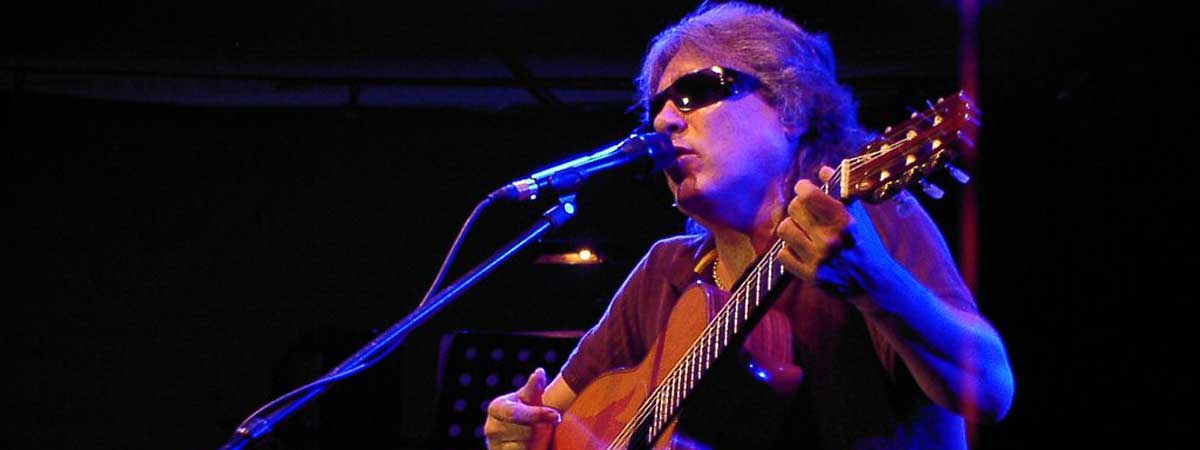
Jose Feliciano
One of the few artists to have hits in both English and Spanish, Puerto Rican virtuoso guitarist, singer, and composer Jose Feliciano is an easily identifiable pop icon. As a blind singer and guitarist, he first received attention playing in the coffeehouses of Greenwich Village while still in high school. His passionate, soulful voice and Flamenco guitar embellishments catapulted him into the pop mainstream, and his version of the Doors' "Light My Fire" topped the hit charts in 1968; he even performed the national anthem at the World Series that year. A prolific recording artist, he recorded light versions of popular rock songs that were embellished with strings and marketed to mature audiences. Although first cast under the American spotlight, he ended up more popular with Latino audiences. "Rain" was lifted from "10 to 23", Feliciano's sixth album, which was released in August 1969. "Rain" was followed by another top 10 hit a year later - "Destiny".
The Day Before You Came
ABBA
Very few fans of ABBA realise the significance of this single - that it was actually the very last song the four Swedes recorded together before going their separate ways. The song was recorded for an ABBA album that never eventuated - ABBA never came back from what was always intended to be just an extended break from recording together to finish the album and resume their career. "The Day Before You Came" was put down on 20th August 1982 and released before the end of that year, but sold poorly by ABBA standards and is the most forgotten of ABBA's gems.
It tells of an average day in the life of an ordinary person. At first it appears to be nothing more that a list of actions (I must have read the morning paper going into town... I must have made my desk around a quarter after nine with letters to be read and heaps of paper waiting to be signed, I must have gone to lunch at half past twelve or so). As the song heads towards its conclusion, the lyrics begin to sound like the most dull and depressing ever used in a pop song. And then, right at the end, the miracle happens as Agnetha declares: It's funny, but I had no sense of living without aim, the day before you came. Suddenly it all makes sense: boring lyrics represent a boring, pathetic life, until it is saved by love. This is a love song in which the word 'love' is not even quoted (and that's a rarity). The musical picture painted is of a life caught in the very moment before love steps in. To underline the great power of love, ABBA in their last song chose to sing about its absence, an appropriate ending to a volume of recorded work in which love was its main theme. The song is a literary gem. No wonder the song wasn't a hit; it probably wasn't mean to be. It was for posterity.