
Thank you for the music: Songs I Like To Remember
Love Can Build A Bridge
(Naomi Judd, Paul Overstreet, John Barlow Jarvis/1991) The Judds
The song is a country ballad about the importance of always standing together, and was co-written by Naomi Judd and dedicated to the Judd family and fans as almost a goodbye, as at the time Naomi was chronically ill with Hepatitis-C and was forced to retire as it had been speculated that she had only three years left to live. First recorded by American country music duo The Judds, it was released in December 1990 as the second single and title track from their album of the same name. It was a Top 5 country hit in mid-1991.
It was later covered by Children for Rwanda as a charity single in aid of Save the Children, reaching number 57 in the UK singles chart in September 1994. A new version recorded by American singers Cher, Chrissie Hynde, Swedish singer Neneh Cherry, British singer/guitarist Eric Clapton and with arrangements by David Campbell was released and reached No. 1 in the UK Singles Chart for one week in March 1995. Declan Galbraith sang the song on his 2002 self-titled debut album. Irish boy band Westlife covered it on their eighth studio album The Love Album. The song was also sung by 10-year-old Britney Spears on Star Search in 1991.
The Dance
(Tony Arata) Garth Brooks
When Tony Arata co-wrote this tune, he was a little-known Nashville songwriter. At a random open-mic night at Nashville's Douglas Corner, he met another little-known songwriter, Garth Brooks. "We were both doing whatever we could to stay in Nashville, trying to get our songs heard by anybody. The only folks listening, however, were other songwriters as no one else was usually at our shows," Arata recalled. When Brooks heard "The Dance," he told Arata that if he ever got a record deal he was going to cut it. The song made Brooks a country music superstar and became his signature song.
It was honored as both the 1990 Song of the Year and Video of the Year by the Academy of Country Music. The song was later recorded by the Irish boy band Westlife on their 2006 covers set, The Love Album. The song makes a statement that it is best not to know how things will end, because if you do then you may deprive yourself of certain experiences.
Pretty Paper
(Willie Nelson/1963) Roy Orbison
Early in 1963, the then-unknown Willie Nelson was signed by Fred Foster to the label Monument Records. In October 1963, Nelson sang his newly completed composition "Pretty Paper" for Foster, who decided to forward the song to Roy Orbison. Bill Justis worked the arrangements and the demo tape was sent to Orbison in London, England. At Pye Studios, Justis and Foster made last minute arrangements with the orchestra that was hired for the session. Each musician was provided with microphones newly designed by Decca Records' engineers. The microphones were worn around the neck to amplify the strings. Orbison had a 102-degree fever but attended the recording session anyway. He recorded the song in one take, along with the B-side, "Almost". After moving to RCA Records in November 1964, Willie Nelson recorded his own version, produced by Chet Atkins.
The song tells the story of a street vendor who, during the holiday season, sells pencils and paper on the streets. In October 1963, while walking in his farm in Ridgetop, Tennessee, Nelson was inspired to write the song after he remembered a man he often saw while he lived in Fort Worth, Texas. The man had his legs amputated and moved with rollers, selling paper and pencils in front of Leonard's Department Store. To attract the attention of the people, the man announced, "Pretty paper! Pretty paper!" In 2013, the Fort Worth Star-Telegram identified the man as Frankie Brierton, of Santo, Texas. Brierton refused to use a wheelchair, choosing instead to crawl, as he learned to move while growing up after his legs were affected by a spinal disorder. Brierton sold pencils in Fort Worth, Dallas and Houston.
Father and Son
(Cat Stevens/1970) Cat Stevens
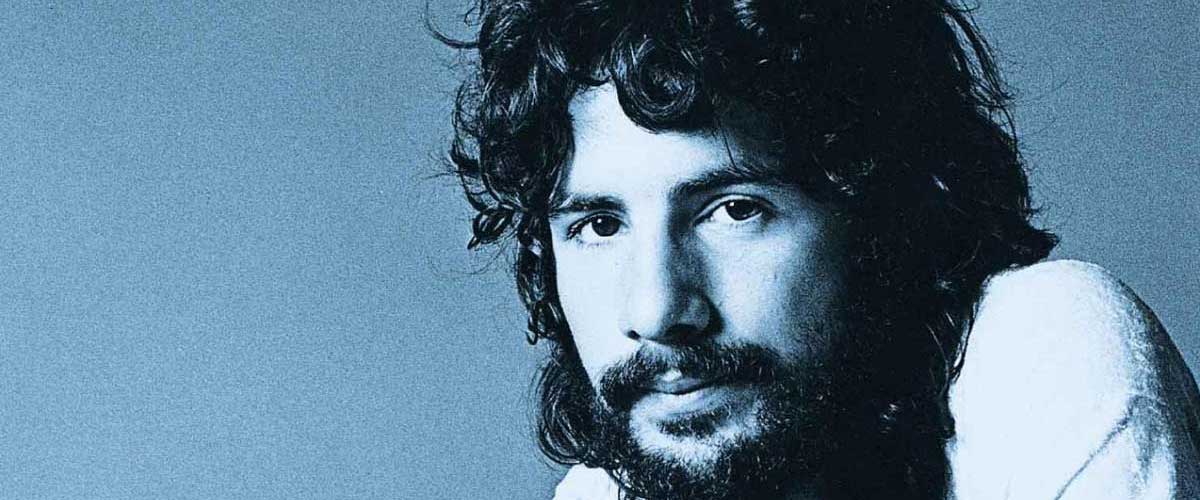
For many Baby Boomers in the late 1960s/early 1970s, British singer Cat Stevens was their voice of reason; the themes of his musical offerings were humble and spiritually informed, the music an artful messenger. The album, Tea for the Tillerman, is quintessential Cat Stevens, containing such classics as 'Wild World', 'Hard Headed Woman' and 'Father And Son'. The lyrics may be steeped in the ideology of the 1970s, but the music is far too inventive and engaging to ever grow outmoded. Playing guitar and keyboards, Stevens and second guitarist Alun Davies achieve a delicate interplay (augmented by Del Newman's strings) that avoids the pomposity found in the work of Jethro Tull and Genesis.
'Father And Son', the most most played song from the album, articulates the generation gap with pinpoint accuracy, in much the same way Mike + The Mechanics' 'Living Years' did a decade or so later. Interviewed soon after the release of "Father and Son" by Disc Magazine, Stevens was asked if the song was autobiographical. He said, "I've never really understood my father, but he always let me do whatever I wanted - he let me go. "Father And Son" is for those people who can't break loose."
Up Around The Bend
(John Fogerty/1970) Creedence Clearwater Revival
'Up Around the Bend', the second of three Top 10 singles from CCR's Cosmo's Factory LP, first charted in May 1970, and spent 3 months on the charts. Cosmo's Factory was No.1 on the Billboard Hot 100 for nine weeks, and it spent a total of 69 weeks on the charts. This and most of the Creedence hits had a mysterious ambience associated with the Bayou swamps of the American south. Occasionally, Fogerty lapsed into awkward phraseology and silly imagery as he did here. "You can ponder perpetual motion, set your mind on a crystal day/Always time for good conversation, there's an ear for what you say" - it is hardly engaging poetry, but the sheer confidence of the performance renders everything else irrelevant. That opening guitar riff screams out of the speakers, demanding your attention and riveting you to your seat. What is just as amazing is that Fogerty's howl is the aural equivalent of his guitar solo.
When The Girl In Your Arms Is The Girl In Your Heart
(Sid Tepper, Roy C. Bennett) Cliff Richard
Like several other of Britain's early rock 'n' roll artists, the professional career of Cliff Richard (real name Harry Rodger Webb) started at the Two-I 's Coffee bar in London. After a brief spell as a skiffler, Richard began to model himself on his idol, Elvis Presley. Backed by his group, The Drifters, a recording opportunity arose in 1958 and he enjoyed his first hit, 'Move It'. An appearance on the groundbreaking British TV show Oh Boy!, a change of name to The Shadows to avoid confusion with an American group of the same name, and a new clean cut image, set him onto the road of fame that he has been travelling on for nearly 50 years. Ironically, Cliff is not backed by The Shadows here but Norrie Paramor and His Orchestra. This song was his 15th single, and his third No.1 in Australia.
The song has been covered by many artists, the only one to become a top selling single being by American songstress, Connie Francis. Her version, re-worded as "When The Boy In Your Arms Is The Boy In Your Heart", was released in the US a month after Cliff's UK release.